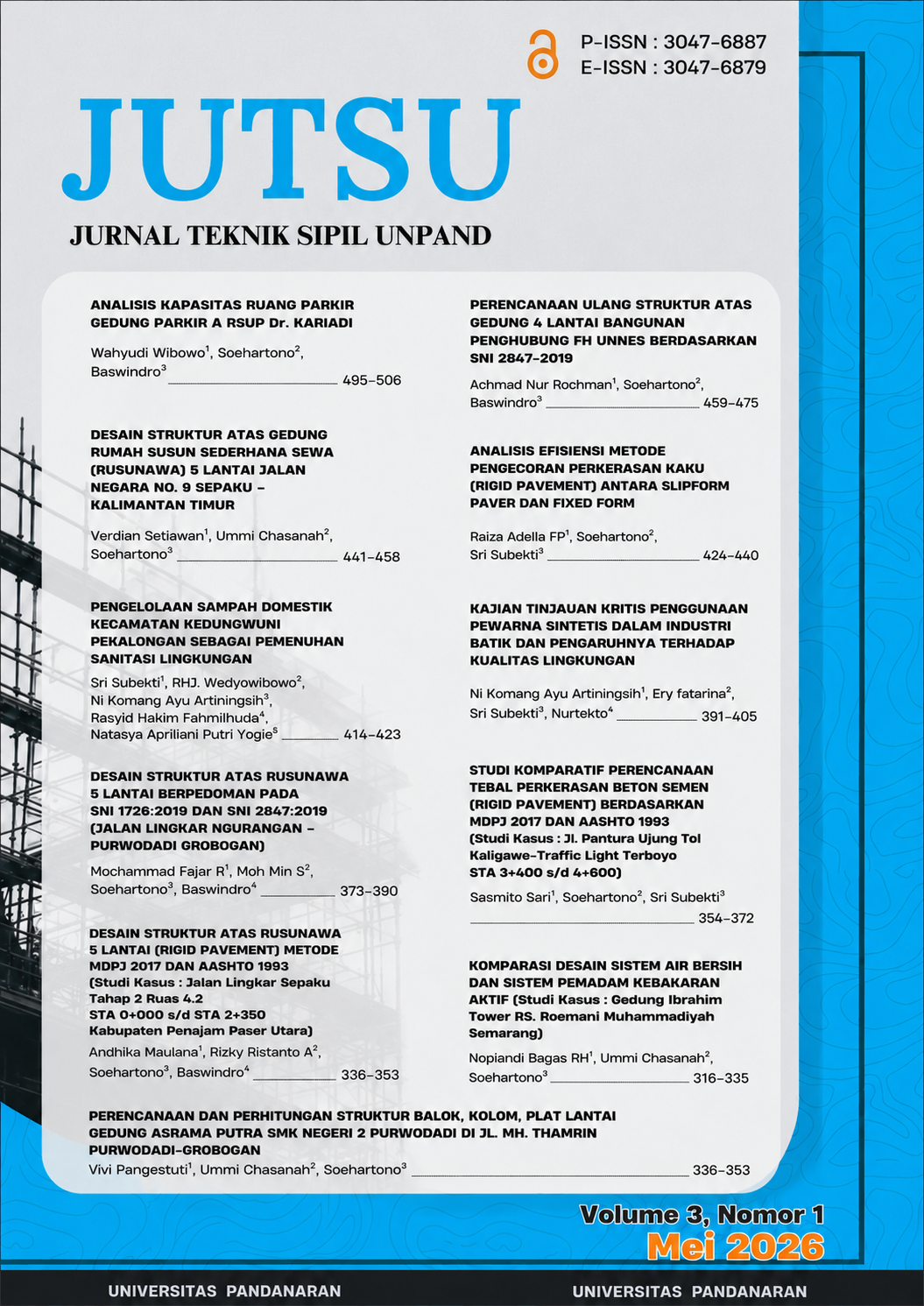
PENGELOLAAN SAMPAH DOMESTIK KECAMATAN KEDUNGWUNI PEKALONGAN SEBAGAI PEMENUHAN SANITASI LINGKUNGAN
DOI:
https://doi.org/10.69796/vzq4dn52Keywords:
Management, rubbish, domestic, sanitation, environmentAbstract
The continuous rise in waste generation, driven by population growth, poses environmental challenges, particularly as landfill space becomes increasingly limited. In the Kedungwuni District of Pekalongan Regency, waste management remains an unresolved issue. Kedungwuni District comprises three urban villages and 16 rural villages, covering an area of 22.94 square kilometers. A sustainable waste management program supporting community- and technology-based targets is being implemented on the ground through the optimization of "Waste Banks" (community-run collection points) and by encouraging residents to sort inorganic waste at the source for exchange and economic gain. Additionally, the adoption of a circular economy shifts the paradigm from a "throw-away" culture to a closed-loop system where waste is reprocessed into new raw materials; local-scale composting and biogas technologies convert organic waste into fertilizer or alternative energy; and a "zero-waste" lifestyle movement promotes the use of personal containers to reduce single-use plastic consumption.
Downloads
Published
Issue
Section
License
Copyright (c) 2026 Sri Subekti, RHJ. Wedyowibowo, Ni Komang Ayu Artiningsih, Rasyid Hakim Fahmilhuda, Natasya Apriliani Putri Yogie (Author)

This work is licensed under a Creative Commons Attribution 4.0 International License.


