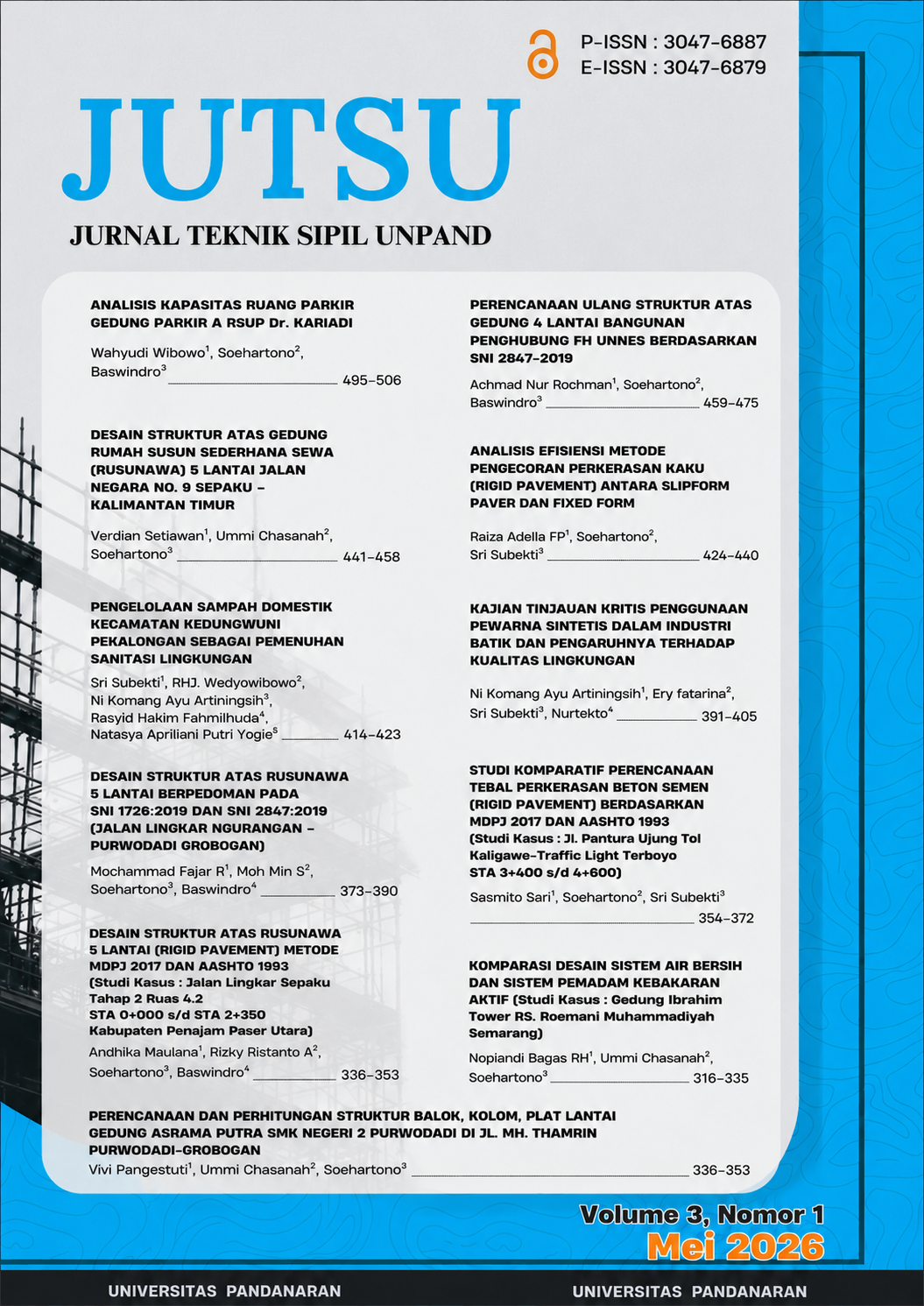
KAJIAN TINJAUAN KRITIS PENGGUNAAN PEWARNA SINTETIS DALAM INDUSTRI BATIK DAN PENGARUHNYA TERHADAP KUALITAS LINGKUNGAN
DOI:
https://doi.org/10.69796/2wfx7v09Abstract
The batik industry is a cultural heritage sector that makes a significant economic contribution, particularly in Indonesia. However, the use of synthetic dyes in the production process generates liquid waste containing chemicals that are hazardous to the environment. This study is grounded in the Sustainable Consumption and Production (SCP) concept developed by the United Nations Environment Programme (UNEP, 2023), which emphasizes the importance of resource efficiency, waste reduction, and pollution prevention in industrial production activities. Furthermore, this research draws upon the study by Lin et al. (2023), which highlights that synthetic dye waste can have toxic effects on aquatic ecosystems, human health, and environmental quality if not adequately treated. This article examines the environmental impact of chemical-based batik dye wastewater and explores management alternatives through a literature review of studies published between 2020 and 2025. The findings indicate that batik wastewater contains heavy metals, toxic dyes, persistent organic compounds, and pollutants—such as Chemical Oxygen Demand (COD) and Biological Oxygen Demand (BOD)—that degrade water quality. Research also demonstrates that untreated wastewater discharge disrupts aquatic ecosystem balance and poses risks to public health. Proposed solutions include the implementation of Wastewater Treatment Plants (WWTPs), the use of adsorption and bioremediation technologies, the adoption of natural dyes, and the promotion of environmental awareness among batik industry stakeholders. This study is intended to serve as a foundation for developing policies and appropriate technologies to support the sustainability of an environmentally friendly batik industry.
Downloads
Published
Issue
Section
License
Copyright (c) 2026 Ni Komang Ayu Artiningsih, Ery fatarina, Nurtekto, Sri Subekti (Author)

This work is licensed under a Creative Commons Attribution 4.0 International License.


